1.Nitrile Coated Palm:
- Smooth Nitrile (The Oil Barrier)
This is a solid, non-porous coating that creates a continuous film.
Performance: Acts as a liquid barrier. It has excellent abrasion resistance and prevents oil from soaking through to your skin.
Advantage: Very durable and easy to wipe clean.
Weakness: In oily or wet conditions, it becomes very slippery (like a bald tire on a wet road).
Best For: Handling dry abrasive parts or tasks where you need to keep light oils off your skin.
- Foam Nitrile (The “Sponge” Effect)
During the dipping process, the nitrile is whisked or treated to create tiny air bubbles.
Performance: The coating acts like a sponge, wicking oil away from the surface of what you are holding.
Advantage: Provides exc ellent grip in light oil and is highly breathable, which reduces hand sweat.
Weakness: If the glove is submerged in oil, the liquid will eventually soak through the pores to the hand.
Best For: Automotive assembly, general maintenance, and handling small oily parts.
- Sandy Nitrile (The “Suction Cup” Grip)
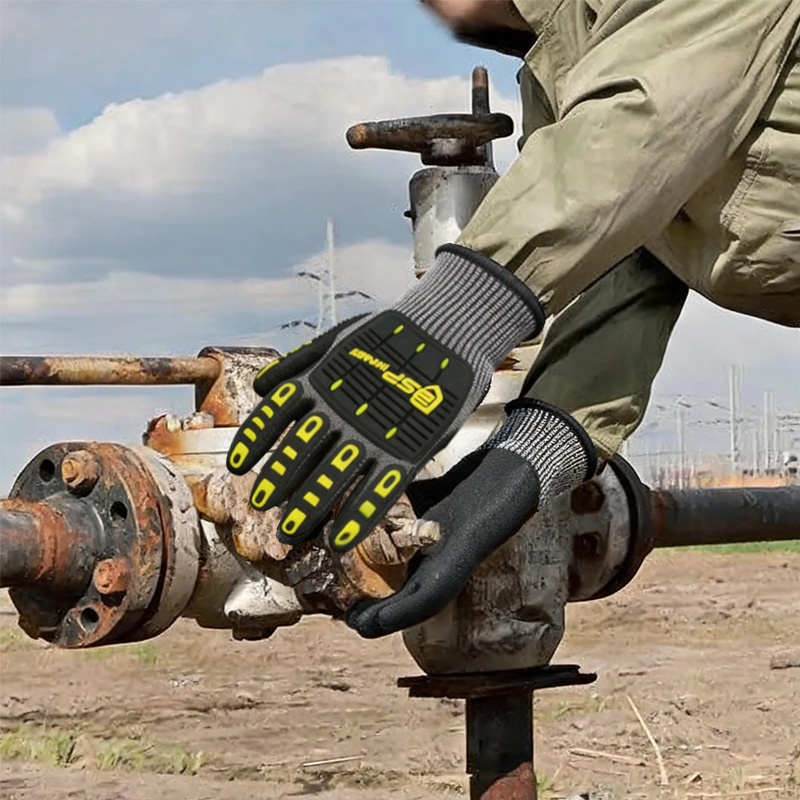
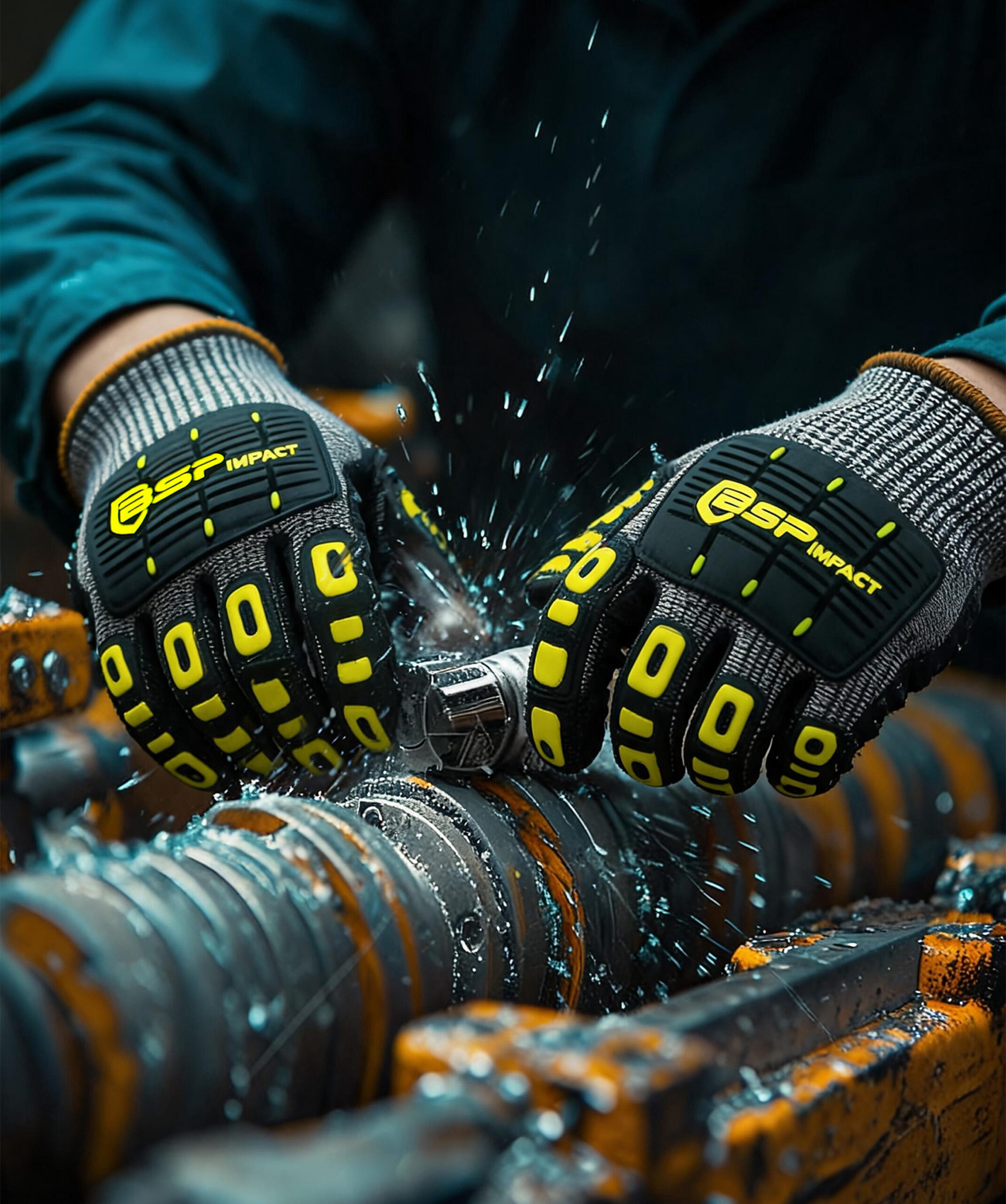
This is the premium choice for the Oil & Gas industry. A special salt-infusion or chemical treatment creates a rough, sandpaper-like texture on the surface.
Performance: The “craters” in the texture act like thousands of tiny suction cups that bite through heavy grease and mud.
Advantage: The highest grip rating in heavy oil and mud. It provides a mechanical lock on slippery surfaces.
Weakness: The coating is usually a bit thicker, which slightly reduces finger sensitivity.
Best For: Drilling, pipe handling, and heavy-duty rigging in offshore/onshore environments.
- Micro-Foam Nitrile (The Precision Tech)
A more advanced version of foam nitrile where the bubbles are microscopic and much denser.
Performance: Ultra-thin and incredibly flexible. It offers the closest “bare-hand” feel while still providing cut protection.
Advantage: Incredible dexterity and high abrasion resistance for such a thin coating.
Best For: High-precision maintenance, electrical work, and handling tiny sharp components.
2.PU Coated Palm
PU(Polyurethane) coated glove is a work glove that has been adorned with a veneer of PU material, applied to the palm. This astute addition augments the gloves’ grip, dexterity, and resilience, rendering them suitable for a myriad of tasks. Industries such as electronics, assembly, and manufacturing frequently employ PU gloves to streamline operations and enhance productivity.
3.Latex Coated Palm
Latex coated gloves are professional protective gloves made with a composite process of knitted liner and latex coating. Featuring outstanding anti-slip, wear-resistant, gripping and protective performance, they are widely used as mainstream protective gear for industrial work, daily labor and precision operation. They are also the ideal choice for labor protection, outdoor work, logistics handling and other scenarios.