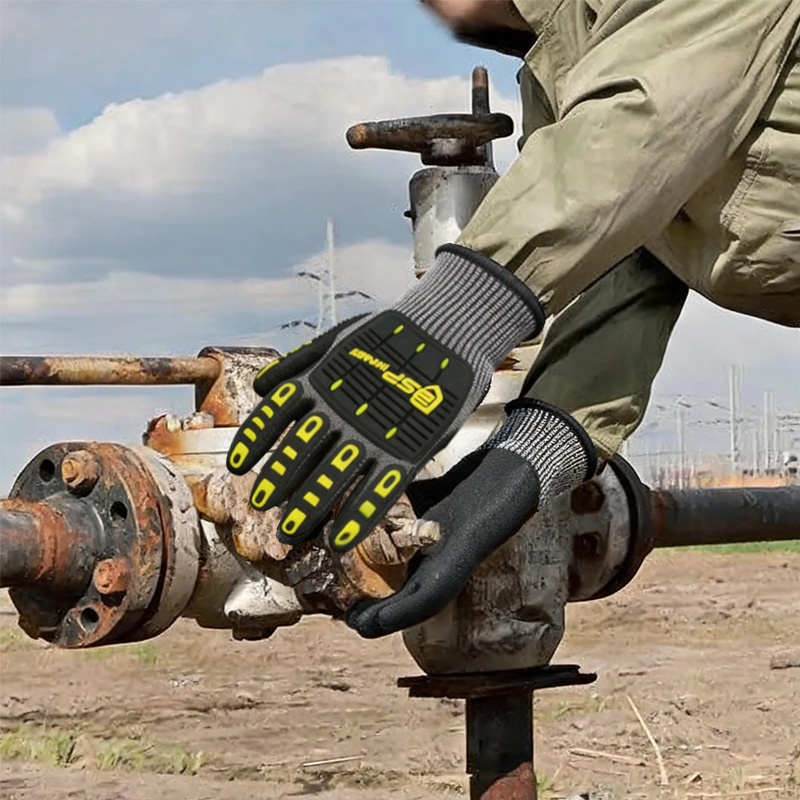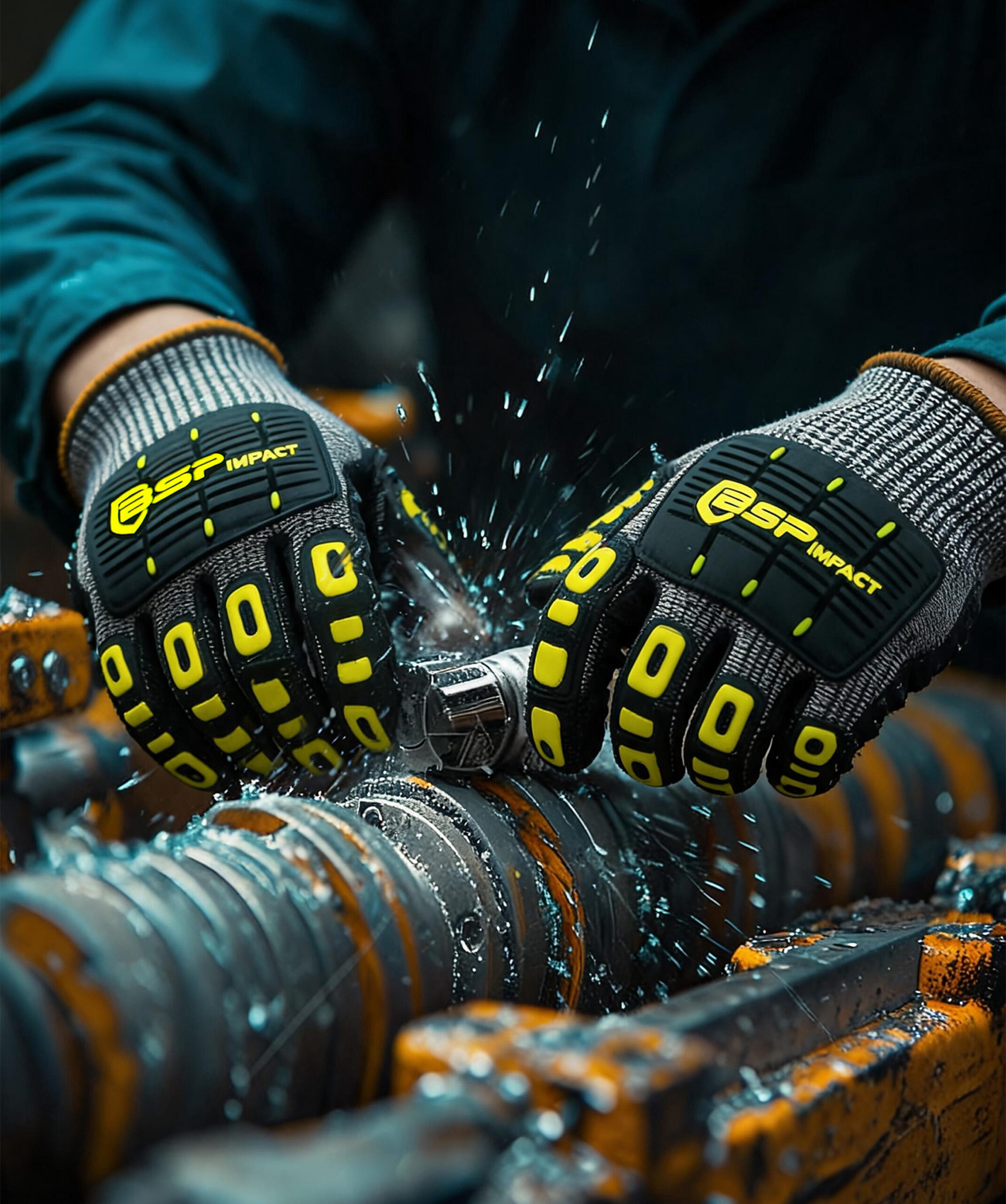
In daily operations across manufacturing, construction, logistics and warehousing industries, hands are consistently the body part most frequently exposed to injury risks. Cuts, abrasion, punctures, chemical splashes, high-temperature contact — these seemingly “routine” hazards collectively form a critical protection challenge that cannot be overlooked in industrial safety. As one of the most widely used and highest-consumption categories of personal protective equipment (PPE), industrial protective gloves are undergoing notable upgrades in technological evolution and market landscape.
The Real Cost of Hand Injuries
Hand injuries account for a persistently high proportion of work related accidents. Among all workplace incidents resulting in permanent disability, hand injuries make up approximately 20%. Behind this figure lie numerous incidents that could have been prevented with proper protection. Physical injuries such as cuts, crushing and punctures, along with chemical harm including acid base corrosion and solvent permeation, often occur within “just a few seconds” under the influence of complacency, yet may lead to permanent functional impairment.
For this reason, the design logic of industrial protective gloves is shifting from “whether protection is available” to “whether the protection is appropriate”. Performance requirements for gloves vary drastically across industries and workstations. Handling metal sheets in automotive manufacturing demands high level cut resistance; material processing in chemical workshops imposes strict requirements for barrier against chemical permeation; while electronic assembly lines prioritize dexterity and anti-static performance.
Material System: The Underlying Logic of Performance Differences
The protective capability of a pair of industrial protective gloves is fundamentally determined by the combination of liner fibers and coating materials.
High performance fibers are the core of cut resistance. High strength fibers represented by HPPE (Ultra High Molecular Weight Polyethylene) and Kevlar (aramid) are knitted into liners via wrapping technology, delivering remarkable cut resistance while retaining soft tactile comfort. Per ASTM F2992-15 or EN 388 TDM-100 testing, cut resistance grades range progressively from A1 to A9 (ANSI) or A to F (EN ISO), corresponding to different cutting load thresholds.
Coating selection dictates the grip performance and durability of gloves. Nitrile foam coating delivers stable grip in both dry and slightly oily environments, paired with good abrasion resistance. PU coating is lightweight and breathable, ideal for precision operation scenarios. Latex coating offers outstanding grip under wet and slippery conditions yet has relatively limited oil resistance. For scenarios involving chemical exposure, full-dip or palm-dip coatings of nitrile or neoprene provide varying degrees of barrier against chemical permeation.
Notably, the application of new generation materials is breaking the long held perception that “protection and comfort cannot coexist”. For example, certain ultra lightweight cut resistant gloves reach ANSI A4 / EN ISO D protection level while weighing roughly 20% less than comparable products, and their upgraded abrasion resistant technology further extends service life.
Standard System: From “Claims” to “Verification”
To enter different markets, industrial protective gloves must comply with corresponding regulations and standards. Understanding this framework is essential for buyers to evaluate actual product performance.
For the EU market, protective gloves fall under the PPE Regulation (EU) 2016/425. Gloves are classified into Category I, II and III based on risk levels. General mechanical protective gloves belong to Category II and require EC type examination by an EU notified body. Chemical-resistant gloves and high risk cut resistant gloves may be categorized as Category III, subject to ongoing surveillance in addition to type examination. At the technical standard level, EN 388 addresses mechanical risks, covering four test indicators: abrasion resistance, cut resistance (Coupe and TDM-100), tear resistance and puncture resistance. EN ISO 374 governs chemical protection, and EN 407 covers thermal protection.
The North American market centers on the ANSI/ISEA 105 standard. Its latest version (2024) revised the cut resistance grading system, with A1 to A9 corresponding to different cutting load ranges. Indicators including abrasion and puncture resistance also adopt a grading system, enabling buyers to horizontally compare protective performance across different products.
Industrial Landscape: Scale and Depth of Chinese Manufacturing
Global supply of industrial protective gloves is highly concentrated in Asian manufacturing bases. Taking China as an example, Gaomi in Shandong has formed an annual production capacity of approximately 4 billion pairs of protective gloves and 200 million pairs of safety shoes, accounting for around one third of China’s total output. Its production and sales volume ranks first nationwide, with products exported to more than 130 countries and regions. Shandong province dominates the labor glove industrial chain, where the output of yarn labor gloves exceeds 60% of the national total. A complete industrial chain has taken shape, spanning yarn spinning, glove knitting machinery manufacturing and finished product export.
Beyond sheer scale, the industry is growing in depth. Some manufacturers have mastered full range seamless glove knitting capabilities from 7G to 21G, supported by multiple coating production lines including PVC dotted coating, PU dip coating, nitrile/latex dip coating. They can supply customized products with varied gauges, coatings and stitching styles in a combinatorial manner. This “one stop” product matrix lowers supply chain management costs and offers flexible assortment options for brands and distributors with multi category procurement demands.
OEM and ODM: How Brands Select Cooperation Paths
For brands aiming to enter the industrial protective glove market, the choice of manufacturing cooperation model directly impacts product positioning and time-to-market.
The OEM model suits customers with clear product specifications. Brands provide technical drawings, material requirements, target protection grades and brand logos, and the factory manufactures products to these specifications. Product intellectual property rights belong to the brand, and the factory will not supply the same design to third parties. This model is suitable for brands with mature product systems and supply chain management capabilities.
The ODM model lowers the threshold for product development. Drawing on insights into industrial protection scenarios, the factory delivers end to end development services from concept design and material selection to prototype sampling. Brands may select existing platform products from the factory for branding customization, or propose functional requirements for targeted development by the factory’s R&D team. The core value of ODM lies in shortened development cycles — foundational work such as impact-resistant structure, dip coating formulation and comfort tuning has already been completed by the factory, so brands do not need to conduct verification from scratch.
Leading manufacturers in the industry usually offer both OEM and ODM services, with clear clauses on intellectual property ownership defined during cooperation. Factories equipped with R&D and testing capacity can complete performance verification at the sampling stage, avoiding costly rework from “mass production before problem detection”.
Practical Dimensions for Supplier Selection
Procurement decisions for industrial protective gloves essentially strike a balance between protective performance, wearer comfort and overall cost. Suppliers are recommended to be evaluated from the following dimensions:
First, verifiability of protection data. Request test reports compliant with target market standards, clearly stating all grades under EN 388 or ANSI/ISEA 105. Key indicators such as impact resistance, cut resistance and chemical permeation resistance should not only carry vague wording of “meeting standards”, but be backed by specific numerical values.
Second, scenario comprehension capability. A competent supplier can recommend suitable product portfolios according to the customer’s operation scenarios instead of merely pushing single items. For instance, workstations exposed to both metal cutting and oil contamination require composite solutions combining cut resistance and oily grip.
Third, production flexibility and stable quality control. Large-scale manufacturing of industrial protective gloves is not difficult; the challenge is ensuring every batch meets consistent protection standards. Factories with in-house testing laboratories, “production based on sales” models and product traceability systems offer better consistency and transparency in cooperation. Terms including intellectual property ownership, minimum order quantity, development lead time and sampling fees should be clearly agreed upon at the early stage of cooperation.
The technical barrier for industrial protective gloves is not simply “being able to manufacture”, but consistently manufacturing correctly. As hand protection evolves from “uniformly distributed labor supplies” to “position-tailored safety gear”, the manufacturing side’s technical accumulation and quality control capability will become the core underlying factors for brands when selecting partners.