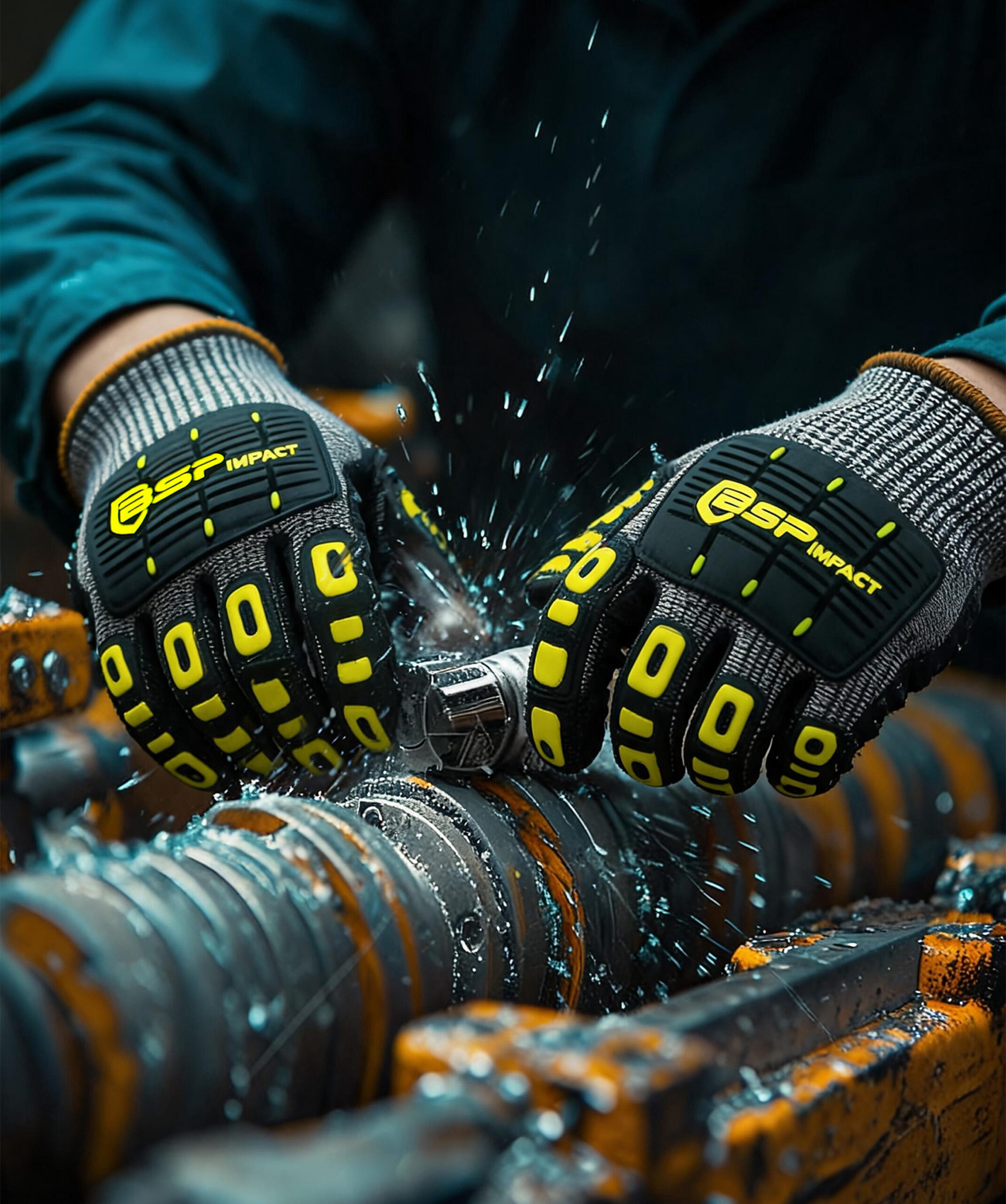
In 2026, technological innovation in the glove industry is focused on three key areas: material revolution, process upgrades, and smart integration. In the cut-resistant sector, Dyneema® has launched its third-generation Diamond fiber, which offers six times the strength of standard HPPE fibers while reducing weight by 40%. This single-yarn solution delivers high cut resistance while maintaining thinness and dexterity, and is rapidly gaining traction in industries such as automotive, metalworking, and food processing. Domestic companies have simultaneously achieved breakthroughs in composite core-spun yarn and 3D glove-mold shaping technologies, addressing the pain points of traditional cut-resistant gloves—namely, being “stiff, thick, and slippery”—while improving fit and resistance to deformation.
In the field of chemical protection, graphene-based multifunctional coatings have emerged as a key focus. Through nanostructure design, these coatings combine barrier properties, hydrophobicity, breathability, and touchscreen compatibility. Their ultra-thin profile does not compromise tactile sensitivity and significantly enhances the acid, alkali, and solvent resistance of nitrile and latex gloves, making them suitable for high-risk environments such as chemical plants, laboratories, and pharmaceutical facilities. Nanofiber-reinforced weaving (NFW) technology extends the service life of gloves used in radiation environments to 2.5 times that of traditional coated models, while retaining over 60% of tensile strength.
In smart manufacturing, seamless knitting, zoned reinforcement, fully automated dipping, and AI vision inspection are becoming increasingly widespread, boosting the first-pass yield to over 99.5% and shortening delivery cycles by 30%. Meanwhile, green and low-carbon practices have shifted from being a “bonus” to a “prerequisite”: mass production of gloves made from bio-based latex, biodegradable nitrile, and recycled fibers is accelerating; EU regulations such as CBAM and REACH are compelling companies to reduce their carbon footprint, and the circular economy model has become a core competitive advantage for leading brands.