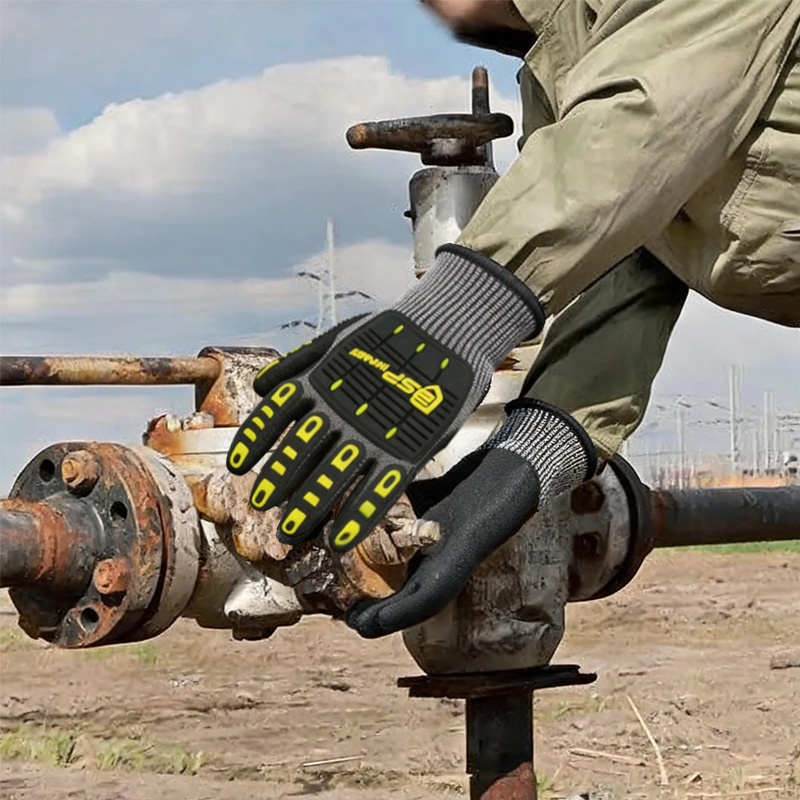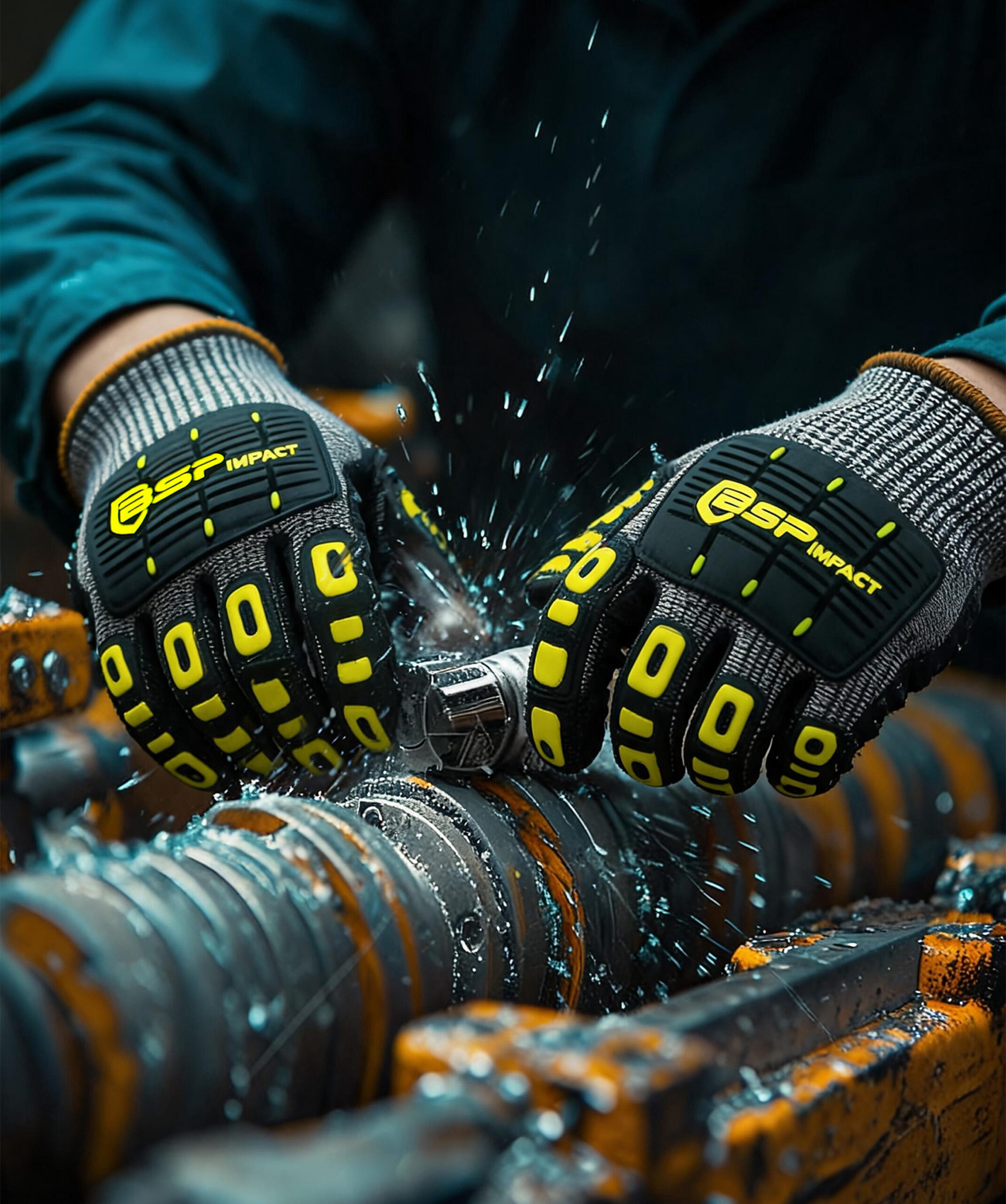
In the oil and gas industry, gloves are more than just hand protection—they are specialized equipment designed to handle a “triple threat”: mechanical impact, chemical exposure, and extreme environments.
To ensure safety, these gloves should comply with several international standards, depending on the specific task.
- Mechanical Risks (Cuts, Punctures, Abrasion)
The most common injuries in the oil field involve crushing or lacerations. Standards verify how much force a material can withstand.
ANSI/ISEA 105 (US Standard): Measures abrasion, cut, tear, and puncture resistance. Cut levels range from A1 to A9. For heavy-duty oil work, levels A4 and above are typically required.
EN 388 (European Standard): Uses a four-digit code plus two letters (e.g., 4X42CP) to rate:
Abrasion resistance
Blade cut resistance (Coupe test and TDM-100)
Tear resistance
Puncture resistance
- Impact Protection
This is critical for “iron roughnecks” and pipe handlers. Impact-resistant gloves feature TPR (Thermoplastic Rubber) pads on the knuckles and fingers.
ANSI/ISEA 138: This is the primary standard for impact performance. It rates gloves from Level 1 to Level 3 (Level 3 offers the highest energy absorption).
EN 388:2016 (P Rating): If a glove passes the impact test under European standards, it is marked with a “P” at the end of its code.
- Chemical and Liquid Resistance
Oil and gas workers frequently handle drilling muds, hydraulic fluids, and crude oil.
EN ISO 374: The gold standard for chemical protection. It tests for:
Permeation: How long it takes a chemical to breakthrough.
Degradation: How the glove material changes after contact.
ANSI/ISEA 105 (Chemical Section): Covers permeation and degradation resistance for specific hazardous chemicals.
- Thermal and Environmental Protection
Whether you are dealing with flash fires or sub-zero temperatures on an offshore rig, these standards apply:
NFPA 2112: For flash fire protection. Gloves must be made of flame-resistant (FR) materials that won’t melt or drip onto the skin.
EN 407: Evaluates protection against thermal risks (heat and/or fire).
EN 511: Essential for cold-weather operations; it measures resistance to convective cold, contact cold, and water permeability.